
Here comes the good news! Official announcement: These four types of farms are exempt from the environmental protection tax!
Release time: 2018-04-23
【Summary Description】
Starting April 1 this year, China entered the first tax collection period for the environmental protection tax. Recently, a reporter learned from the Henan Provincial Animal Husbandry Bureau that the Ministry of Finance, the State Administration of Taxation, and the Ministry of Ecology and Environment have jointly issued a “Notice” clarifying various issues related to the environmental protection tax. The Notice provides specific guidance on monitoring and calculating emissions of taxable air pollutants and water pollutants, determining the pollution equivalent numbers for taxable water pollutants, calculating emissions of taxable solid wastes, and filing tax returns.
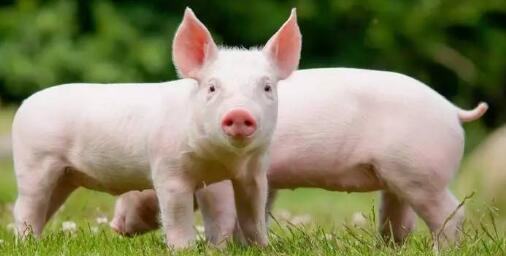
Livestock farms with a live pig inventory of fewer than 500 heads are exempt from the environmental protection tax.
Relevant officials from the Henan Provincial Animal Husbandry Bureau remind farmers that four types of farms in Henan are exempt from the environmental protection tax. Specifically:
1. Livestock farms engaged in non-production and non-business activities—meaning farms that do not operate commercially (i.e., are not primarily aimed at making a profit), such as those used for scientific research, personal consumption, or consumption by organizations.
2. Non-scale farms. Non-scale farms that do not meet the collection standards are exempt from paying the environmental protection tax, which effectively provides indirect support to small rural farms. The collection standards are as follows: cattle stock exceeding 50 head; sheep stock exceeding 500 animals; pig stock exceeding 500 head; and chicken stock exceeding 5,000 birds.
3. Large-scale farms that comprehensively utilize manure and wastewater. Large-scale farms that have already met the collection standards may carry out comprehensive treatment and utilization of their manure and wastewater; in such cases, they can apply for tax exemption.
4. Farms that do not directly discharge pollutants into the environment may either build their own manure and wastewater treatment facilities to treat these pollutants, or discharge them to centralized sewage and waste treatment centers—either approach will also exempt them from the environmental protection tax.
Large-scale farms that meet the standards for manure and wastewater treatment can also be exempt from taxes.
A reporter from the Dahe Daily discovered that farms (or households) raising fewer than 500 pigs are exempt from the environmental protection tax. So, how can large-scale farms qualify for tax reductions or exemptions?
A relevant official from the Henan Provincial Animal Husbandry Bureau stated that Article 12 of the Environmental Protection Tax Law explicitly stipulates: Taxpayers who comprehensively utilize solid wastes that meet national and local environmental protection standards shall be temporarily exempt from paying the environmental protection tax.
In other words, if a livestock farm comprehensively utilizes all its manure and sewage and accurately measures the quantities involved, it can be exempted from the environmental protection tax. Even if only part of the farm’s manure and sewage is comprehensively treated—provided that this portion is accurately measured—the environmental protection tax on that treated portion can also be reduced or exempted. “Large-scale livestock farms seeking exemption from the environmental protection tax must submit an application,” a relevant official from the provincial animal husbandry bureau told reporters.
Before the environmental protection tax was introduced, failing to pay it was considered a “violation”; now, it has become an “offense.”
According to the official, although the country had previously imposed sewage discharge fees on the aquaculture industry, the shift to an environmental protection tax means that while failing to pay the previous fees was merely a violation of regulations, failing to pay the new tax now constitutes an illegal act.
a. If the amount of tax evasion is substantial and exceeds 10% of the tax owed, the offender shall be sentenced to a fixed-term imprisonment of no more than three years or detention.
b. If the amount of tax evasion is extremely large and exceeds 30% of the tax owed, the offender shall be sentenced to a fixed-term imprisonment of more than three years but less than seven years, and also fined.
c. After the tax authority issues a notice of collection, the taxpayer shall pay the outstanding tax liability and any late payment penalties. If the taxpayer has already been penalized, the government will not pursue criminal liability—unless the taxpayer has previously been penalized for tax evasion within the past five years or has already received a second penalty from the tax authority.
Related news

400-993-6168
Address
No. 779 Xinma West Road, Tianyuan District, Zhuzhou City, Hunan Province, China